
The rapid advancement of high-throughput analytical technologies, such as DNA microarrays, NMR, and LC-MS, has driven the emergence of omics sciences. Depending on the biological level of study, four major omics fields can be distinguished:
- Genomics (DNA)
- Transcriptomics (mRNA)
- Proteomics (Proteins)
- Metabolomics (Metabolites)
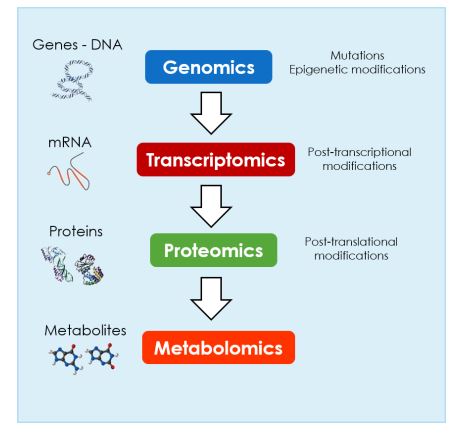
These omics levels are highly interconnected, forming a complex network of biological regulation and response.
Our Research in Metabolomics
In recent years, our research has focused on the development and adaptation of chemometric methods to analyze metabolomic datasets, particularly in studying the effects of environmental stressors on various model organisms, including cell cultures, rice, yeast, daphnias or zebrafish.
These metabolomic studies have been conducted using a range of analytical platforms, such as NMR, LC-MS, GC-MS, and MSI. The application of chemometric approaches is a critical factor at different stages of the metabolomic workflow, ensuring accurate data processing, pattern recognition, and biological interpretation.
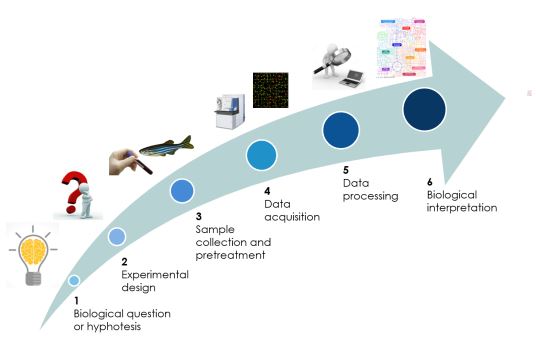
Our ongoing work aims to advance data fusion strategies, integrating information from multiple metabolomic platforms (e.g., NMR and LC-MS) as well as combining different omic levels (e.g., metabolomic and transcriptomic data obtained via RNAseq). This integrated approach will enhance our understanding of biological responses to environmental stressors, paving the way for more comprehensive environmental risk assessments.